
Trip Preparation Guides
Everything You Need for a Seamless Amazon & Argentina Fishing Adventure
Planning an expedition with Acute Angling is about more than just booking your dates — it’s about preparing for one of the greatest adventures of your life. To make your journey smooth, safe, and stress-free, we’ve created detailed Trip Preparation Guides for each of our destinations.
These guides are designed to give you all the information you need in one place — from visas and flights to what to pack and how to get the most out of your fishing days.
What’s Inside Each Guide
Our Trip Preparation Guides cover every detail of your adventure, including:
Travel Requirements — Visa instructions, flight planning, and travel insurance tips.
Logistics — How transfers, hotels, and charters are arranged before and after your trip.
The Experience — What to expect at your lodge, mothership, or bungalows, plus key features of each trip.
Itinerary Overview — A day-by-day outline so you know exactly how the adventure flows.
Packing Lists — Clothing, personal items, fishing gear, and Amazon Associate product links for tried-and-true recommendations.
Health & Safety — Vaccination info, water safety, evacuation notes, and dietary considerations.
Tipping Guidelines — Clear recommendations so you can plan ahead.
Species Resources — Links to our in-depth articles and species guides to help you understand and prepare for the fish you’ll target.
How They Help
Our guides were created to:
Save you time by answering the most common traveler questions in advance
Remove uncertainty so you can focus on enjoying the trip, not worrying about logistics
Ensure you arrive fully prepared with the right documents, gear, and expectations
Provide insider tips that only come from decades of experience outfitting anglers in the Amazon and beyond
How to Use the Guides
Download your guide at least 90 days before departure.
Review the Travel & WeTravel Portal sections first to confirm your documents and info are submitted.
Use the Packing List to prepare — including affiliate product links if you want recommendations.
Read the Itinerary & Experience sections so you know what to expect each day.
Explore linked articles to deepen your understanding of the species and fishing tactics.
Keep the guide handy on your phone or tablet during travel for quick reference.
Ready to turn preparation into action? Book your fishing adventure now!
📞 (866) 832-2987
Join Us: Get monthly newsletters, discount offers and new content notifications exclusively for our members. Join for FREE below with your name and email.
Read Our Newest Blogs
Lorem ipsum dolor sit amet, consectetur adipiscing elit. Aliquam
Overview of Fly Fishing Gear for the Amazon
Preparing your fly-fishing gear for an Amazon trip can feel overwhelming. The Amazon Basin is home to an incredible diversity of species, habitats, and fishing techniques, so there is no single equipment list that is perfect for every destination. A trip to the Rio Negro, for example, may require very different tackle than an expedition to a small stream in the Brazilian highlands. For that reason, it is always wise to consult with experienced jungle fishing specialists, such as the team at Acute Angling, before your trip. That said, the recommendations in this guide will provide a solid foundation and serve as an excellent starting point for planning your gear
Fly Rods for Amazon Fishing
Generally, for jungle fly fishing use fast action saltwater rods that load heavy lines and flies. There are some exceptions to this such as dry fly fishing opportunities which we will explain below.
Fly Reels
Match the reel size with the rod weight you will be using. Saltwater grade reels are preferred due to their stronger drag. Strong drag systems will give you a chance to stop the fish before it reaches the flooded jungle and wraps your line up in a mess of submerged trees.
For smaller 5 weight and 6 weight outfits freshwater reels are generally suitable for Pacu and Matrinxã. However, if you are going to be using your six weight for Tambaqui or Juturana we recommend getting a saltwater grade reel as they pull aggressively.
Fly Lines
Before we dive into fly lines it is important to know that there are fly lines created for cold weather fly fishing (trout, pike, salmon, steelhead, etc) and there are fly lines created for tropical climates. If you try to use a cold-water fly line in a tropical environment it will get sticky and soft. Just don’t do it. Bring lines designed for tropical fishing.
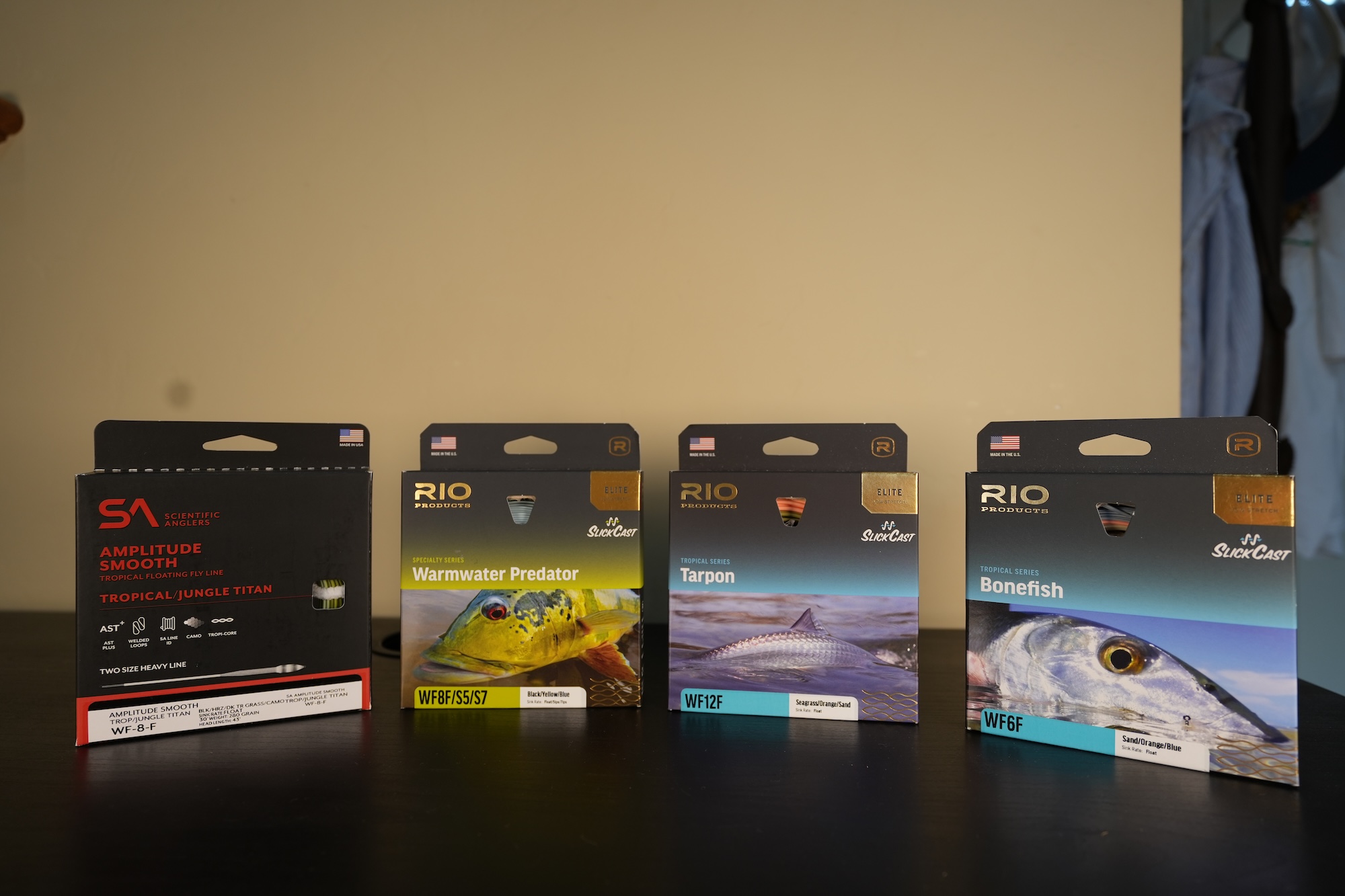
Example Fly Lines for Jungle Fishing
Floating: Floating fly line is the workhorse of jungle fly fishing. The only target species that rarely requires a floating line is the arapaima. Some good choices include Rio’s Warmwater Predator line or Scientific Angler’s Mastery or Amplitude Tropical/Jungle Titan.
Intermediate: Sometimes you need to get your presentations just below the surface and fish flies 6 inches to 2 feet down. This is where intermediate lines really shine. Good options are again the Rio’s Warmwater Predator (intermediate head) line or Scientific Anglers Sonar Titan Tropical/Jungle Clear Tip.
Sinking: Rio’s warmwater predator fly line (float/5ips/7ips) or Scientific Anglers Sonar tropical jungle custom tip. Another option (especially for arapaima or Payara) is Rio’s Saltwater Leviathan line series. These are fast sinking lines used for blue water fish, but they will absolutely work for Arapaima. They are also useful when you need to get a line down fast for Payara.
Tropical Saltwater Lines: If you've been on a bluewater or saltwater flats trip targeting tarpon, roosterfish, or bonefish, you may already own fly lines that work well in the jungle. Many tropical saltwater lines perform exceptionally well for freshwater species. However, lines designed specifically for delicate bonefish presentations are generally poor choices for peacock bass, golden dorado, payara, and other powerful fish that require casting large, wind-resistant flies or fishing with sinking lines. Tropical lines built for species such as tarpon or snook are typically much better suited for these applications because they turn over bulky flies and handle quick pickup-and-laydown casts well. However, bonefish lines still have a place on lighter 5- or 6-weight outfits when targeting species like pacu or matrinxã with small dry flies.
Leaders and Tippets
Before discussing specific leader sizes, it's worth touching on the choice between fluorocarbon and monofilament. Fluorocarbon is generally more abrasion resistant and, because it is denser than water, sinks more readily. For subsurface flies, it is often the better choice. Monofilament, on the other hand, tends to float or sink more slowly, making it a popular option for surface flies. That said, many experienced jungle anglers’ fish exclusively with one material or the other and consistently catch plenty of fish. Either will work well when matched to the situation.
Please also note that there are a large variety of leader set ups in jungle fishing. It really depends on the area where you are fishing, the size of the fish, and size of flies. Here are some typical suggestions though they may not fit every fishery perfectly.
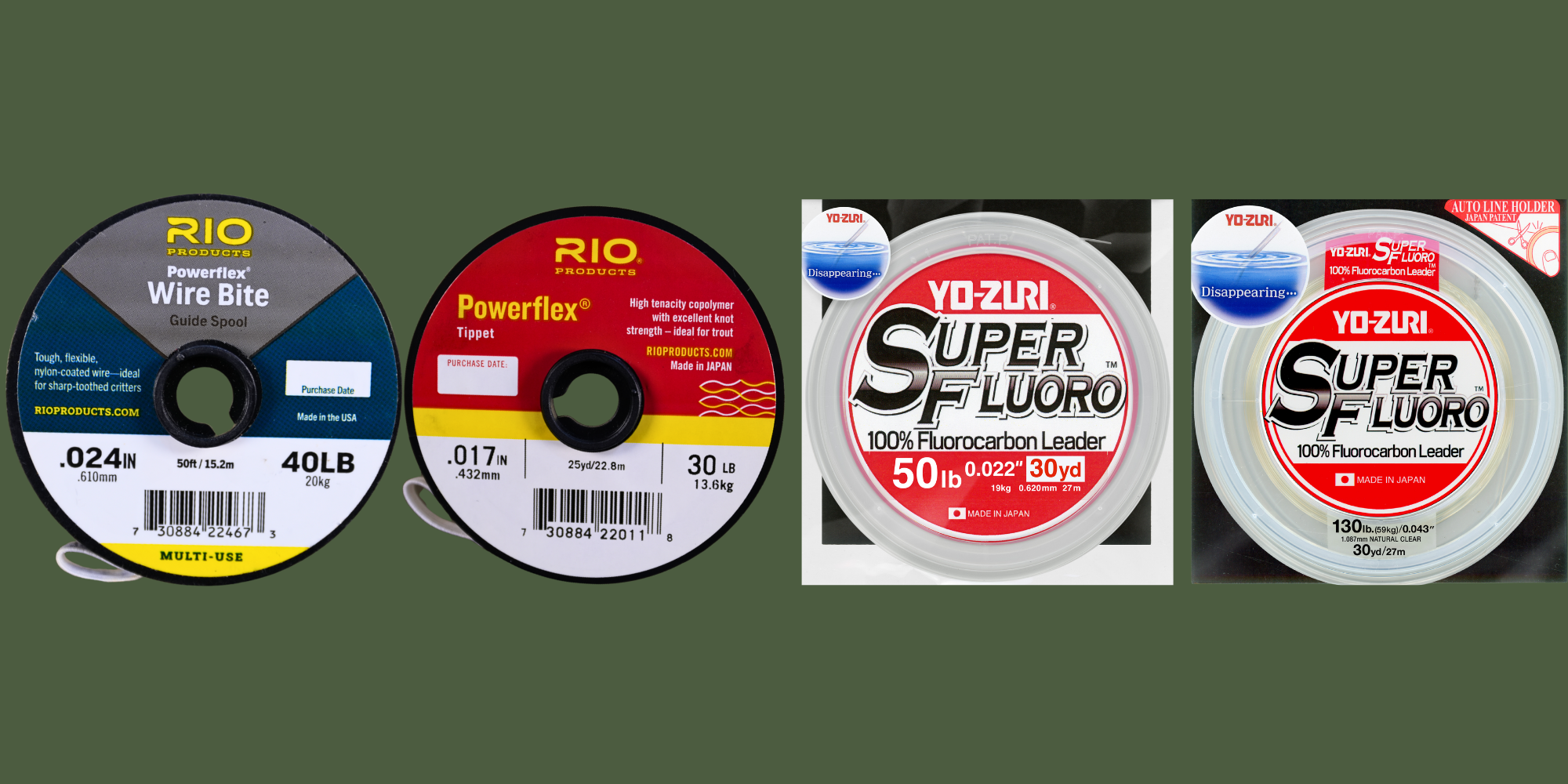
Rio Products & Yozuri Leaders
In the chart below:
• Fluorocarbon or Monofilament = the fish is commonly targeted with both subsurface and surface flies. Bolded means I use that material more often than the other, but I would recommend carrying both.
• Monofilament = you almost always fish surface presentations or just below the surface.
• Fluorocarbon = you almost always fish subsurface.
Flies
Overview
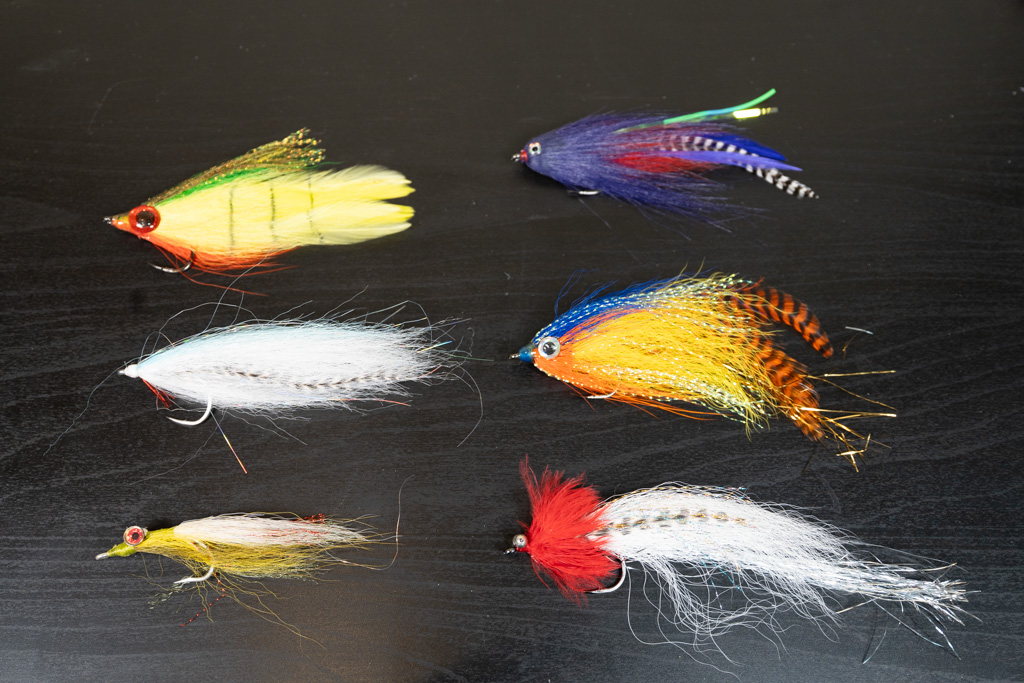
For most jungle fish the essential food source is bait fish. Thus, the importance of having streamers that imitate them. Big surface flies such as various poppers, gurglers, pole dancers, and sliders are important as well. Occasionally a mouse and frog pattern come in handy. Dry flies consist of foam grasshoppers, chubby chernobyl, beetles, and ants. Fruit patterns and inch worms also work by plopping them in water near overhanging vegetation.
Hook Quality
Before we jump into specific flies, please note that jungle flies should be tied on salt water grade hooks. Sometimes hooks made for Pike will work too. Hooks for trout or largemouth will bend easily and we cannot recommend them.
Jungle streamers are tied with various colors. Compared to typical trout or bass streamers colors such as yellow, orange, red, and chartreuse are used more often. I like most of my streamers in the 3/0-6/0 category
Large baitfish flies
Large baitfish patterns 3/0-6/0 include: Lefty’s deceiver, clouser minnow half and half, amazon special, flashtail whistler, reducer, bucktail streamer, game changer, enricos baby dorado, and enricos baby peacock. Greg Popavich flies like the beast and the hollow fleye are great as well. Please note that baitfish patterns used in saltwater fishing or flats fishing can absolutely work in the jungle. Pike flies are often good too.
Small baitfish patterns 2/0-2: I would include a few smaller and thinner diameter baitfish patterns in my fly box such as surf candy and glass minnows. These are especially helpful for fish like jatuarana, smaller peacocks, various pacu species, arowana, and matrinxã
Poppers and Surface Flies 2/0-6/0
For poppers I like NYAP (Not your average popper), Banger, Rainy's PSP Bubble-Head, Double Barrel Popper, and crease fly. Other surface patterns: gurglers, sliders, seducer, pole dancer, and wiggle minnows. Occasionally a mouse, frog, and even lizard fly pattern works.
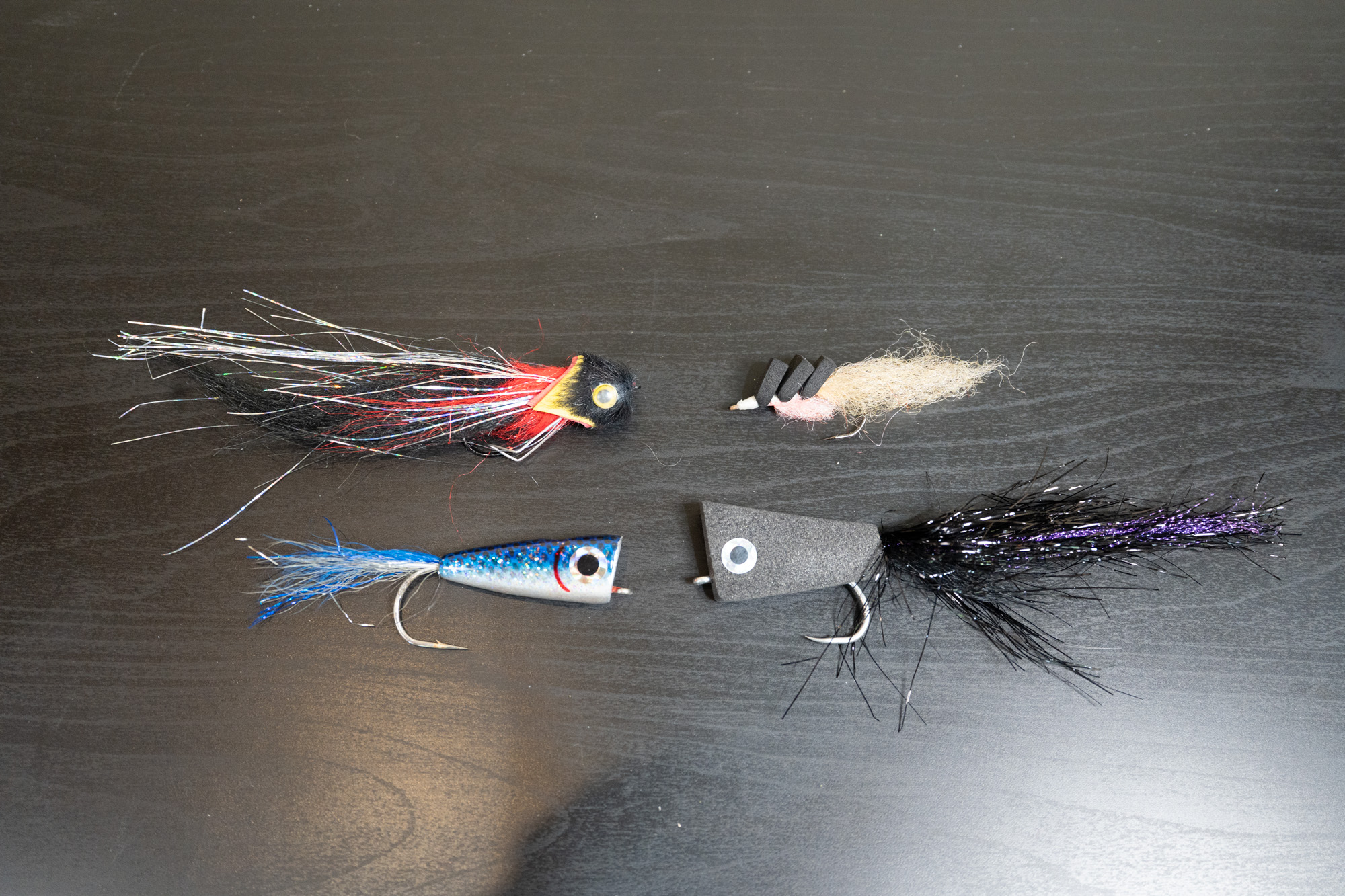
Poppers
Insect Imitations: Chubby chernobyl, foam grasshopper patterns, fat alberts, beetles, and ants in the #6-8 range. I use grasshoppers a lot personally. Flies imitating inch worms can also be effective at times. Consider flies like foam inchworm, the green weenie, and squirmy worms to imitate those.
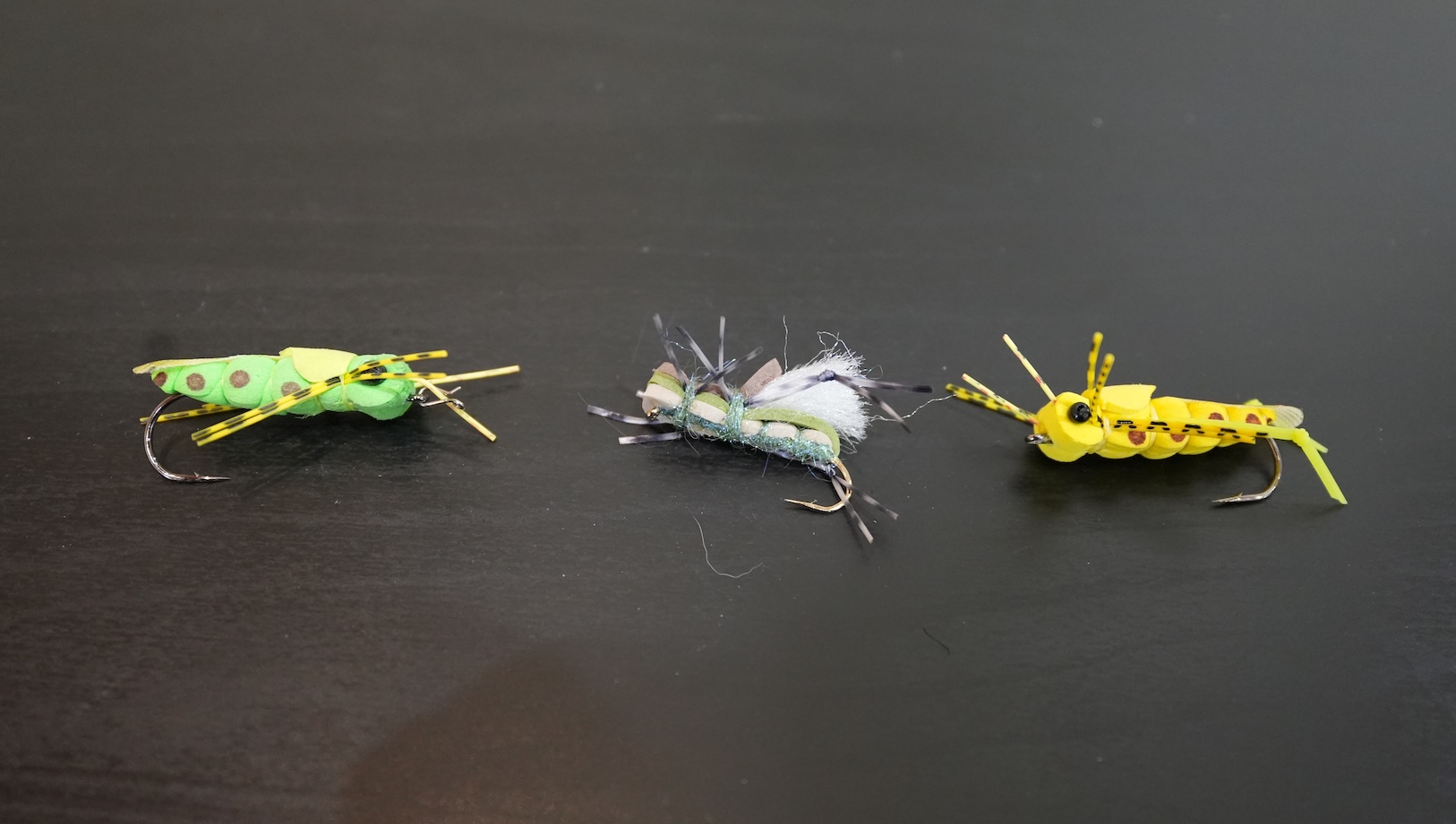
Grasshoppers
Fruit and berry flies: You can imitate them by spinning some deer hair on a hook or using glow bug yarn, but if you can find little silicone balls those work the best. They give a very distinct plop sound when they hit the water that attract fish. Colors in purple, green, red, blue, and white are great choices.
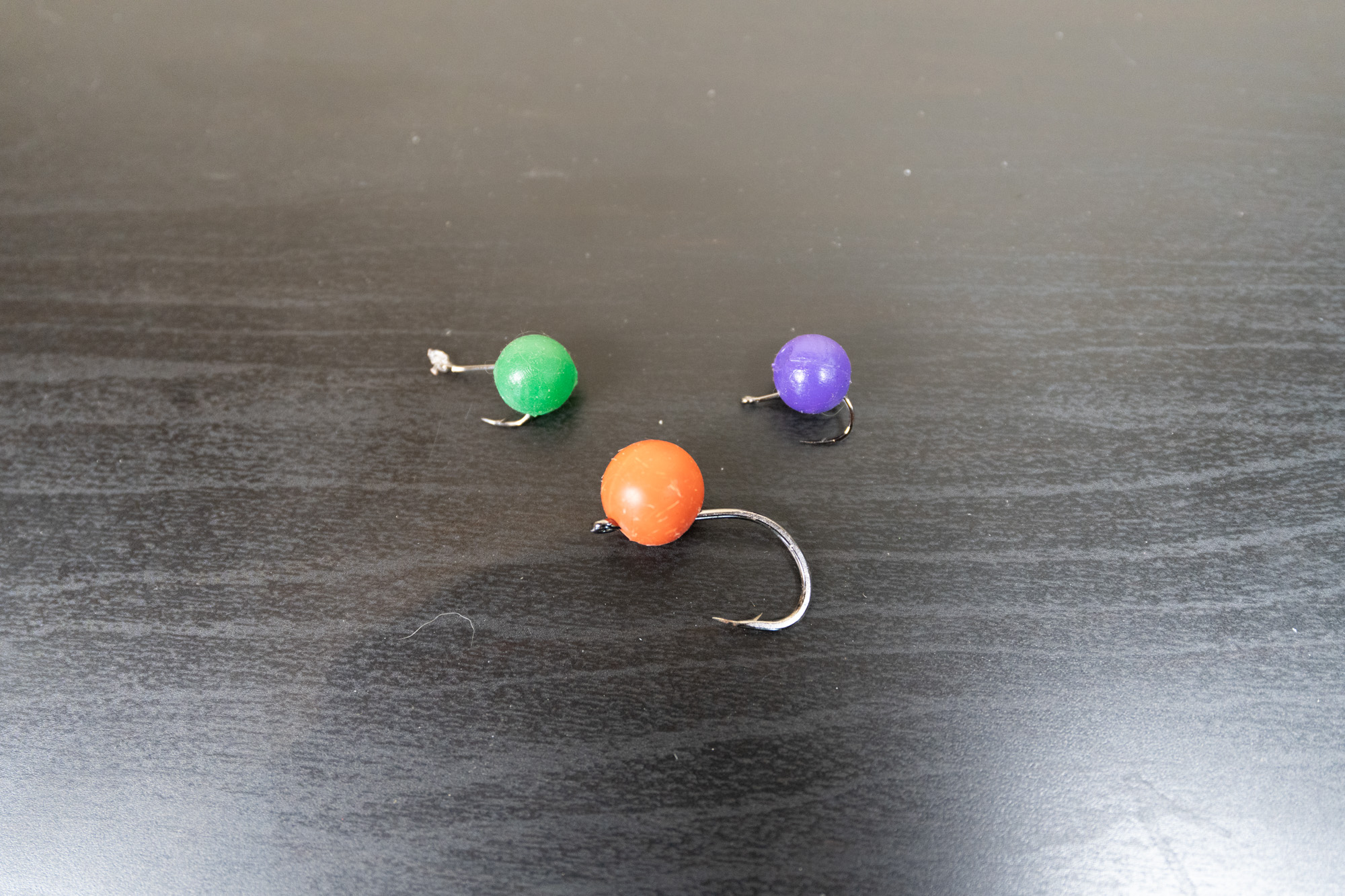
Fruit & Berry Flies
Small nymphs: There are several smaller fish species in the Amazon like Oscars and Piaus. They will often fall for a prince nymph, copper john, or pheasant tail in sizes #14-8.
Algae: A specialty fly you should carry for a fish called a Pacu Borracha is a olive woolly bugger #8 or 6. It will imitate the vegetation this pacu eats.
(866) 832-2987


