
Dourada
The Amazon’s Long-Distance Migrating Giant
Dourada
The Amazon’s Long-Distance Migrating Giant
Guide
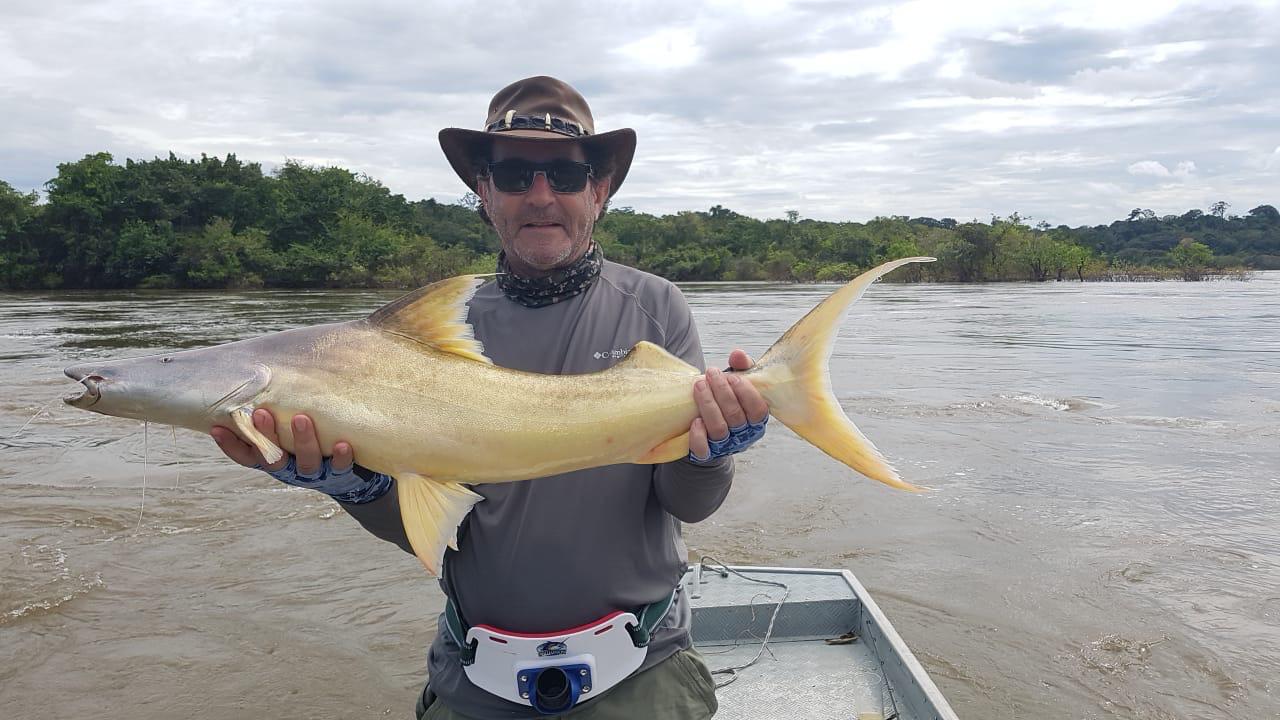
The Dourada is one of the Amazon’s most iconic and powerful catfish, prized for both its remarkable size and epic migrations. Sleek, silver-bodied, and built for life in the current, this deep-water predator spends its life journeying across thousands of miles of river, from the estuary of the Amazon all the way to the Andean foothills of Peru and Colombia. These muscular fish are built for endurance and predation, making them one of the most formidable freshwater gamefish in South America.
Often confused with the shorter-bodied piraíba, the Dourada can be identified by its more streamlined frame, prominent forked tail, and sleek profile. It thrives in deep, fast-moving channels and confluences, particularly near rocky outcrops and submerged structure. Whether you’re targeting them for their raw power or to check one of the Amazon’s most legendary species off your list, the dourada delivers a worthy challenge.
Interesting Facts & Notes
The Dourada undertakes the longest freshwater migration of any known fish, with juveniles traveling over 3,500 km from the Amazon estuary to the Andes to spawn.
Unlike some of its catfish cousins, the Dourada has a more hydrodynamic, torpedo-like body shape and deeply forked tail.
Its Portuguese name “Dourada” means “golden,” referring to the sometimes golden sheen on its scales—especially in younger specimens.
This species is heavily fished commercially and culturally important throughout its range, though still surprisingly difficult to target intentionally on rod and reel.
Where to Catch Dourada
Quick Facts
| Attribute | Description |
|---|---|
| Scientific Name | Brachyplatystoma rousseauxii |
| Common Names | Dourada, Golden Catfish |
| Size Range | Commonly 20–80 lbs; can exceed 150 lbs |
| Region | Amazon Basin, from estuary to Andean headwaters |
| Habitat | Deep main river channels, rocky outcrops, and strong currents |
| Behavior | Extreme long-distance migrator, solitary or in loose aggregations |
| Coloration | Silvery or golden-bronze body with white underside; long forked tail |
| Aggression | Moderate – strikes cut bait or live bait with sudden force |
| Feeding Habits | Piscivore – feeds on smaller fish and migratory species |
| Gamefish Status | Highly prized for its size, strength, and deep-water fights |
Physical Appearance
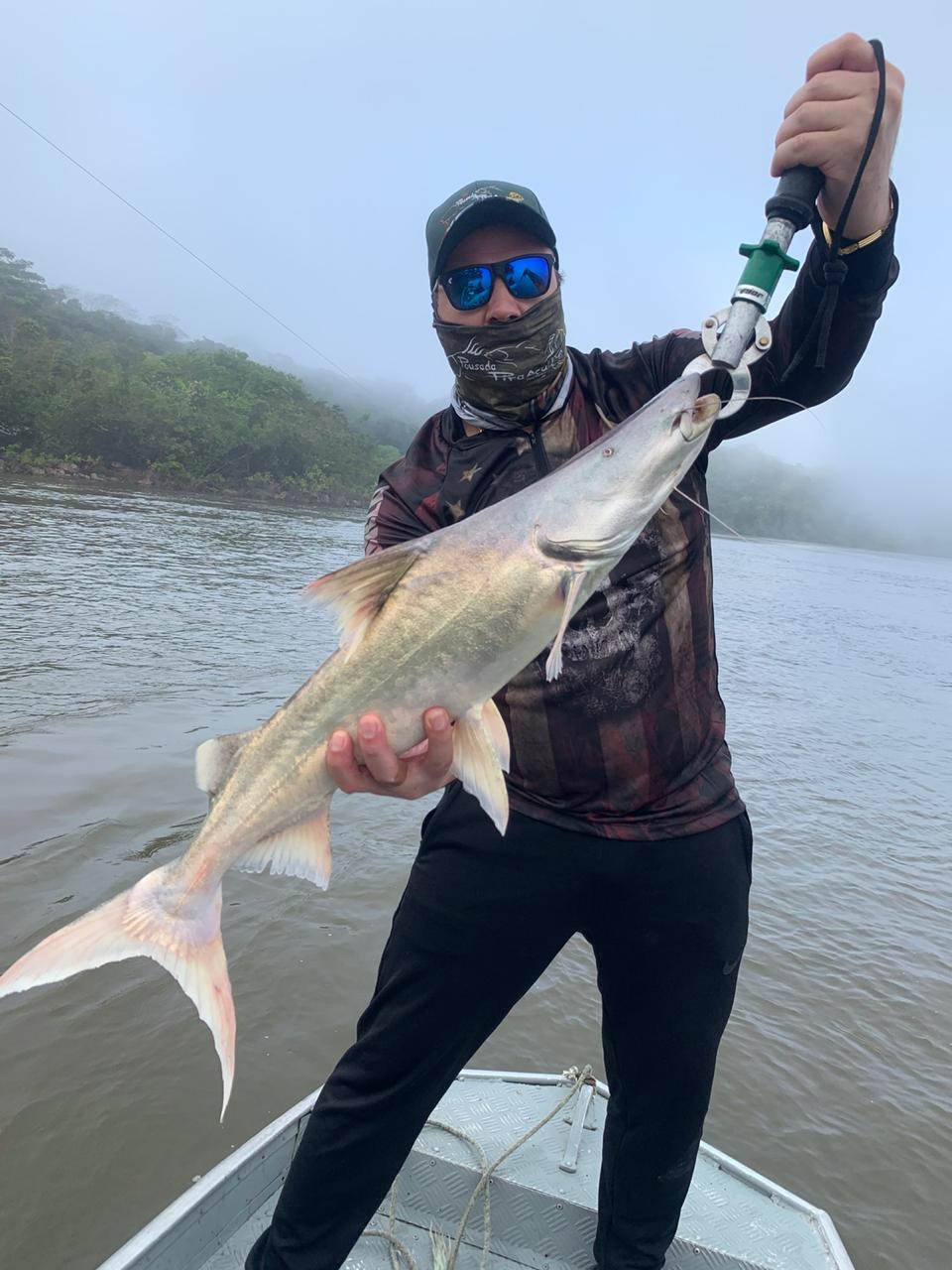
The dourada is built for speed and distance. It has a narrow, hydrodynamic body, a deeply forked caudal fin, and an elongated head with strong jaws and long maxillary barbels. Its coloration ranges from shiny silver to golden, often with a darker dorsal shading. Compared to the piraíba, the dourada is more streamlined, with less girth and more exaggerated forked tail proportions.
How to Identify a Dourada
Dourada: Long, torpedo-shaped silver body with golden sheen, deeply forked tail, and sleek build.
Piraíba: Much bulkier, less forked tail, and a more rounded, robust head.
Babão: Smaller relative; stockier and more flattened head with thick lips.
Fishing Tactics: How to Catch a Dourada
Recommended Techniques
Dourada are best targeted in deep, fast-moving water using bait fishing techniques. Drift fishing with large cut baits near bottom structure, drop-offs, or eddies can be especially effective. These fish are migratory and may be more active in areas where baitfish are also concentrated.
Suggested Gear
Rod & Reel: Heavy-duty conventional or baitcasting setup
Line: 80–100 lb braid with 150+ lb mono or wire leader
Hook: 10/0–14/0 circle or J hooks
Bait: Large chunks of fish, preferably oily species or peacock bass trimmings
Weight: 4–10 oz sinkers depending on current and depth
Related Reading
Join The Adventure
Ready to target the powerful dorado in the heart of the Amazon? Join one of our multi-species adventures and put your skills to the test.
Contact us today:
📞 (866) 832-2987
References
Goulding, M. (1981). Amazon: The Flooded Forest
Barthem, R. & Goulding, M. (1997). The Catfish Connection
Lundberg, J.G. & Akama, A. (2005). Systematics of Brachyplatystoma
Santos et al. (2006). Ecological assessments of B. rousseauxii
Zeinad, A. K. & Prado, R. A. (2012). Peixes fluviais do Brasil: espécies esportivas


