
Silver Drum
Schooling predators of Amazonian deep waters
Silver Drum
Schooling predators of Amazonian deep waters
Guide
The silver drum, known locally as “corvina,” is a deep-bodied, hard-fighting predator found throughout the Amazon and Tocantins-Araguaia river systems. Renowned for its schooling behavior and loud drumming calls, this piscivorous species plays a key role in South American fisheries—both as a gamefish and as a staple food resource. Although often overshadowed by more exotic Amazon species, silver drum are highly targeted by local anglers and can be exciting quarry for those fishing deeper structures and drop-offs.
These fish are most often encountered in the dry season, when they form dense schools in deeper channels and near submerged structures. They are most active in early morning and late afternoon, readily attacking jigs, small plugs, and live bait. With a firm, silvery body, strong jaw, and resonant swim bladder (which produces the characteristic “drum” sound), this species is one of the most important and widespread predatory fish in the Amazon basin.
Interesting Facts & Notes
“Drumming” sounds are produced by rapid muscle contractions around the swim bladder—especially during spawning or agitation.
Commonly found in fish markets around Manaus; a major species in regional commercial and subsistence fisheries.
Often used by locals as bait to target larger predators like redtail catfish or peacock bass.
Where to Catch Silver Drum
Silver drum are not typically a primary target, but they are often caught incidentally while jigging or bait fishing in deep water on these trips:
Blackwater Explorer Liveaboard — Deep pools and drop-offs along major river channels
Curicuriari Lodge — Near structure and deep river ledges
Xingu River Trip — In deeper back channels and along rocky outcrops
Quick Facts
| Attribute | Detail |
|---|---|
| Scientific Name | Plagioscion squamosissimus |
| Common Names | Corvina, pescada, silver drum |
| Size Range | Typically 2–5 lbs; can exceed 11 lbs |
| Region | Amazon and Tocantins-Araguaia basins |
| Habitat | Deep river channels, drop-offs, oxbows, lakes |
| Behavior | Schooling predator, seasonal migrations, bottom-oriented |
| Coloration | Silver-gray with dark dorsal shade and black spot at pectoral base |
| Aggression | Moderate; responsive to bait and jigging |
| Feeding Habits | Piscivorous; feeds on baitfish, shrimp, and aquatic insects |
| Gamefish Status | Popular with locals, moderately pursued by sport anglers |
Physical Appearance
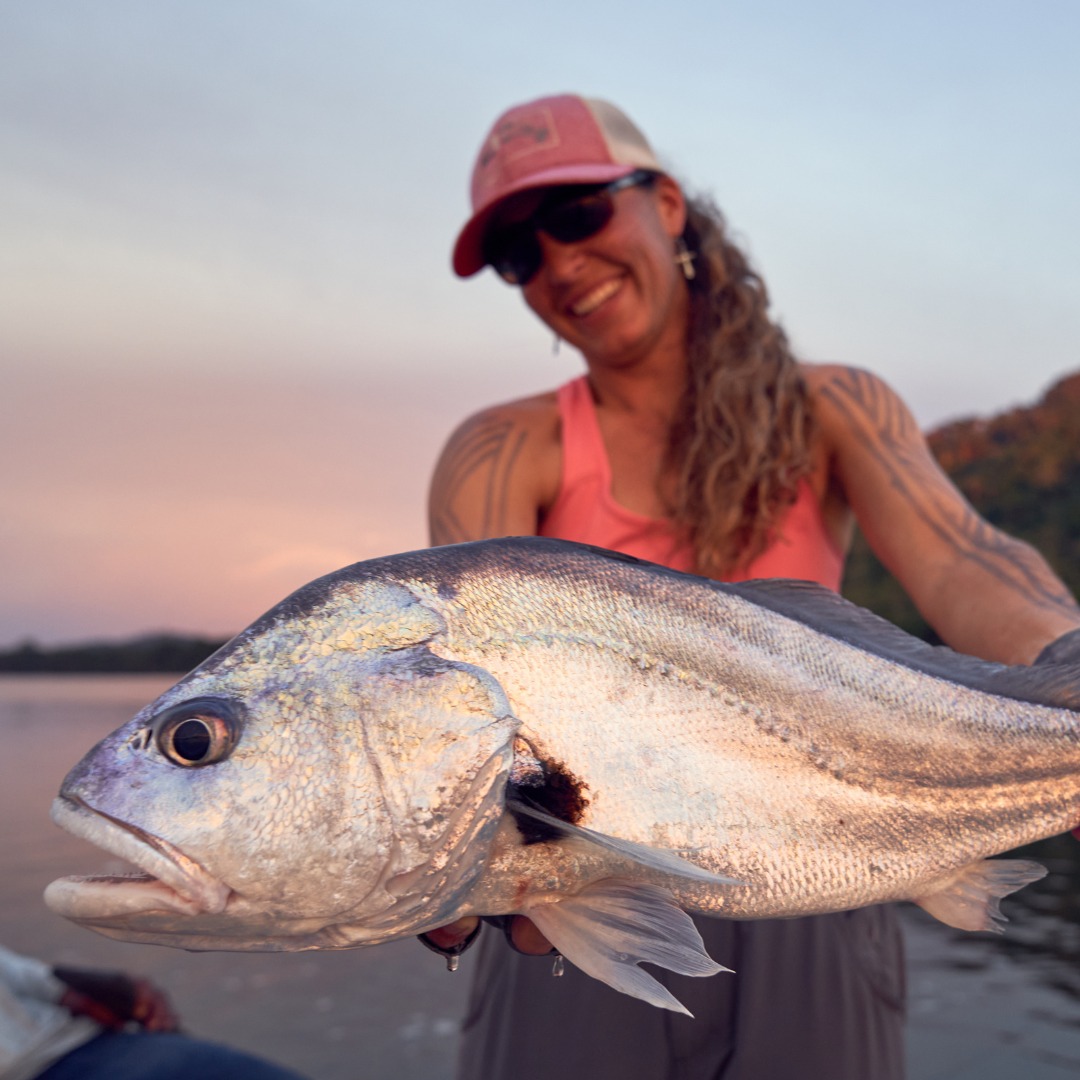
The silver drum is a compact, deep-bodied fish with a noticeably large head and terminal mouth. It has a tall body with a sloping forehead, large eyes, and a single dark spot at the base of each pectoral fin (“axilla”). The coloration ranges from bright silver to gray, with white ventral surfaces and occasional dusky shading along the back and tail.
How to Identify a Silver Drum
Corvina – Large silver drum with high-backed body and big head
Pescada – Another local name; used interchangeably in Brazilian markets
Axillary spot – Distinctive black dot near pectoral fin base is a consistent ID feature
Fishing Tactics: How to Catch Silver Drum
Silver drum are often encountered by anglers targeting other species but can be specifically targeted when schools are located.
Recommended Techniques
Vertical jigging with metal jigs or soft plastics near the bottom
Fishing live or dead bait in deep holes and around structure
Adjusting depth frequently to locate active schools
Suggested Gear
Medium-light spinning or baitcasting setup
20–40 lb braid with fluorocarbon leader
1/2–1 oz jigs, plugs, or cut bait rigs
Sink-tip lines or weighted rigs for depth control
Related Reading
Join The Adventure
Ready to experience the thrill of multi-species fishing in South America? Join us on one of our fully-outfitted Amazon adventures!
Contact us today:
📞 (866) 832-2987
References
Casatti, L. (2005). Chave para a identificação das espécies de Plagioscion.
Goulding, M. (1980). Amazon: The Flooded Forest.
Santos et al. (2006). Biologia e pesca de pescada no rio Amazonas.
HAHN et al. (1997); AGOSTINHO et al. (2002) – cited in Peixes fluviais do Brasil: espécies esportivas.


