
Bacu
The Armored Grazer of the Floodplain
Bacu
The Armored Grazer of the Floodplain
Guide
The bacu, also known as the bacu-arara or rebeca, is one of the Amazon’s most heavily armored fish. Covered in thick bony plates and equipped with sharp, backward-facing spines on its pectoral fins, this strange-looking catfish is as tough as it is peculiar. Though rarely caught intentionally, the bacu’s prehistoric appearance and spiky defenses make it an unforgettable incidental catch during Amazon fishing adventures.
A member of the Doradidae family, this medium-sized catfish inhabits slower waters near the banks, often lurking around submerged vegetation and muddy bottoms. Its presence reflects the complexity of Amazon floodplain ecology, where even fruit-eating, snail-hunting, plant-munching catfish can thrive alongside apex predators like piraíba and peacock bass. While not considered a gamefish, it’s occasionally caught when bottom fishing with natural baits like worms or fruit.
Interesting Facts & Notes
The bacu’s armored body and sharp spines help protect it from predators in complex flooded environments.
Its coloration—blotchy browns, yellows, and deep marbled hues—acts as natural camouflage in muddy, vegetated water.
Known to feed on snails, fruits, seeds, and leaves, it plays a unique role in dispersing floodplain vegetation, contributing to Amazonian ecology (Goulding, 1981).
Despite its defensive armament, it is sometimes consumed by local communities—though its tough hide and spines make it a challenge to clean.
Where to Catch Bacu
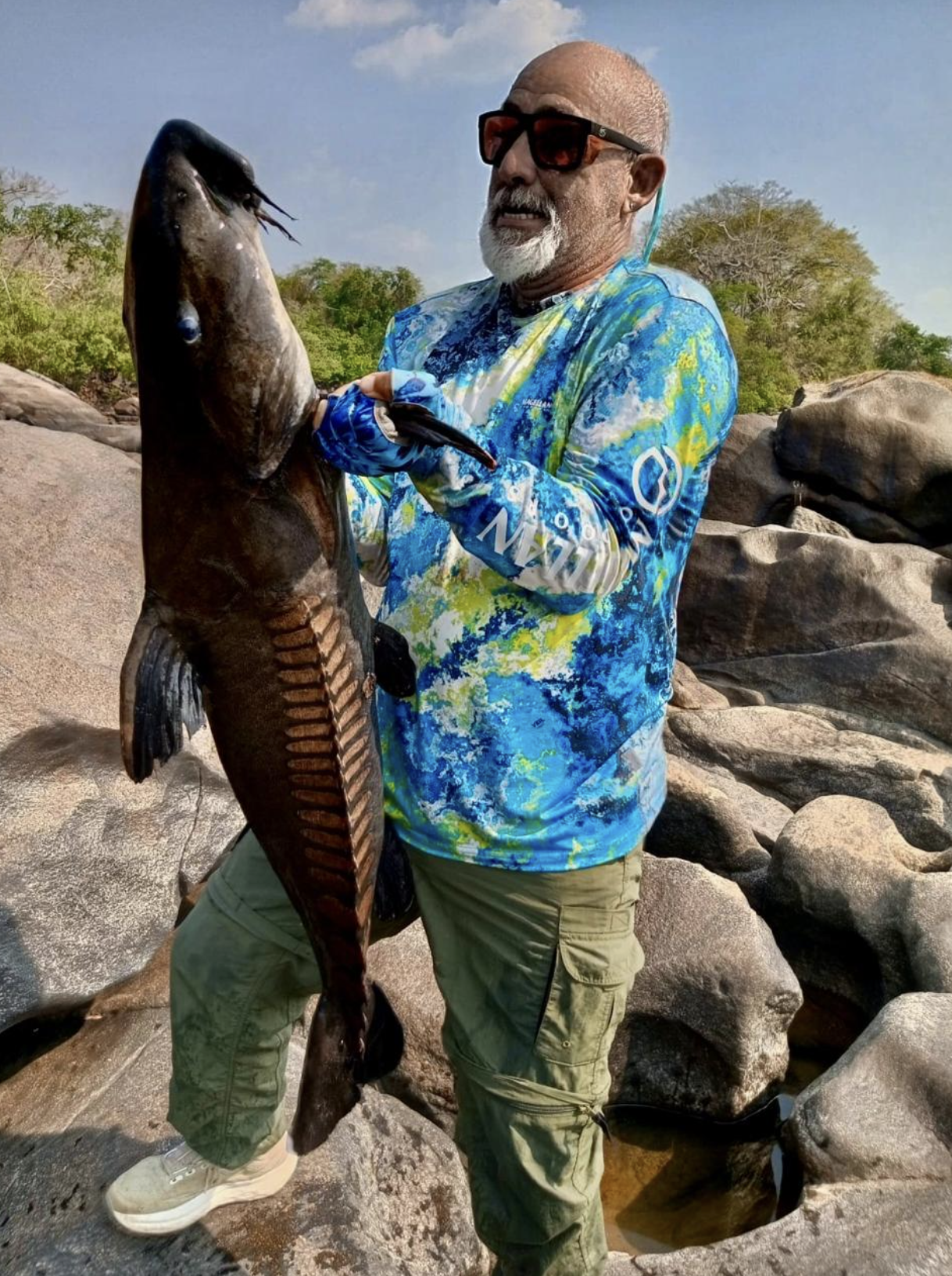
Bacu are not specifically targeted but are occasionally caught on bottom-fishing rigs in slow-moving, vegetated waters:
Rio Aripuanã - Found near submerged woody debris and floodplain pools
Xingu River - Occasionally hooked near flooded forest edges during the dry season
Floating Bungalows - Along quiet, structure-filled shorelines of blackwater lagoons
Quick Facts
| Attribute | Details |
|---|---|
| Scientific Name | Megalodoras uranoscopus |
| Common Names | Bacu, Bacu-arara, Rebeca |
| Size Range | Up to 50 cm (19.7 in); ~5 kg (11 lbs) |
| Region | Amazon Basin, Tocantins-Araguaia |
| Habitat | Slow-moving rivers, flooded forests, and vegetated backwaters |
| Behavior | Bottom-dwelling; prefers calmer, vegetated zones |
| Coloration | Mottled browns and yellows; body armored with bony plates |
| Aggression | Non-aggressive, reclusive |
| Feeding Habits | Omnivore: snails, fruits, seeds, leaves |
| Gamefish Status | Not targeted; rare incidental catch |
Physical Appearance
The bacu’s most distinctive feature is its armor. Thick bony plates run along its flanks, giving it a tank-like build. It also sports a broad head with a slightly upturned mouth and long barbels. The pectoral and dorsal spines are long and sharp, capable of inflicting serious injury if handled carelessly. Its marbled, dark yellow-to-brown coloration blends with the muddy bottoms and vegetation where it lives.
How to Identify Bacu
Bacu-arara — Marbled dark-brown coloration with large bony plates covering the sides
Rebeca — Alternate name used locally, particularly in the Negro River basin
Pectoral fins with large, backward-facing spines and armored dorsal ridge
Thick-set head with downturned mouth and whisker-like barbels
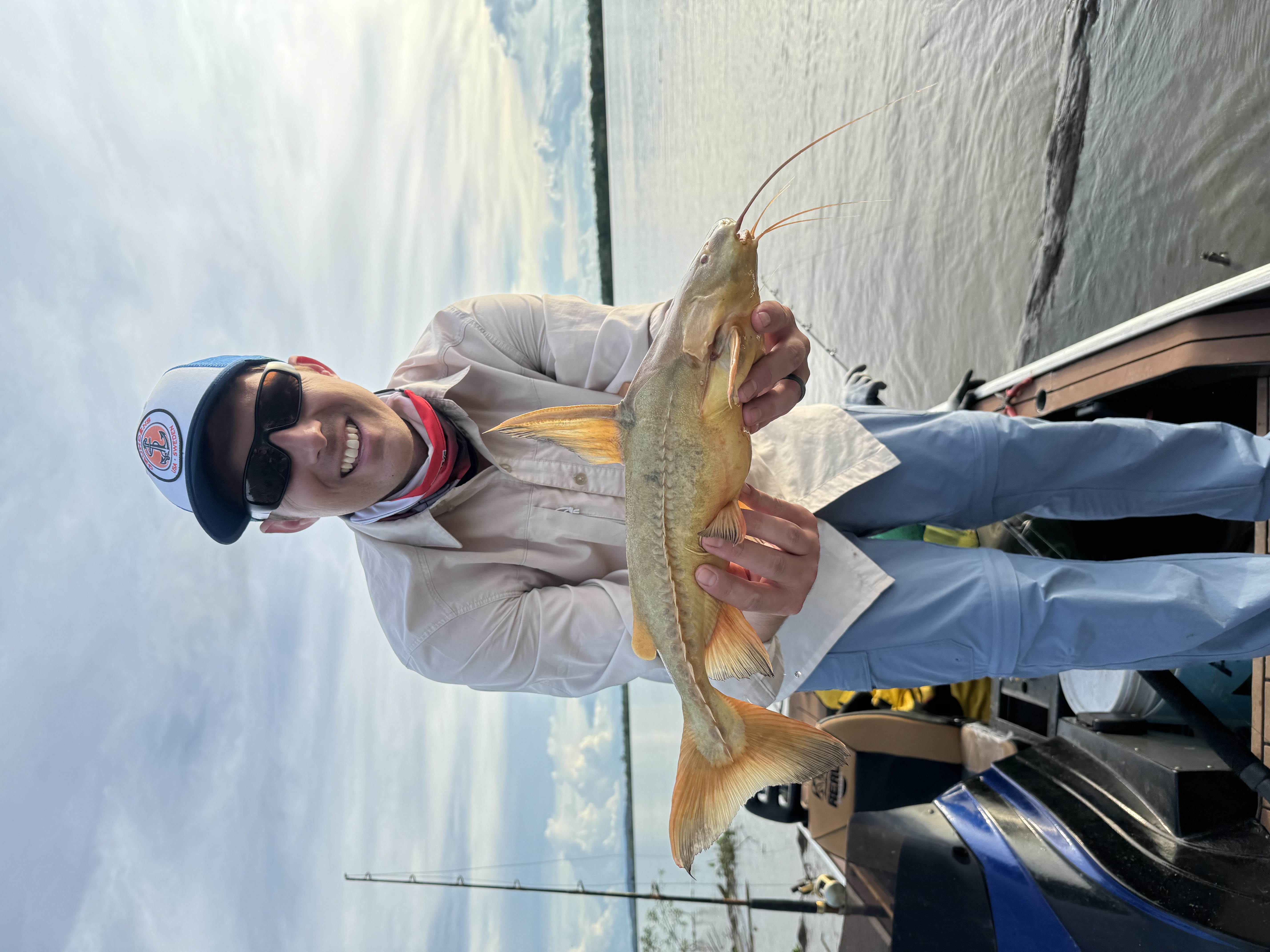
Fishing Tactics: How to Catch Bacu
Although not a sought-after target, bacu are sometimes caught incidentally when fishing for other bottom dwellers like jau or redtail catfish.
Recommended Techniques
Bottom Fishing: Use natural baits like worms, fruit, or snails on a simple weight rig. Cast near submerged brush or vegetation.
Still Fishing: Let the bait rest in calm, silty zones or alongside current breaks where vegetation accumulates.
Suggested Gear
Rod and Reel: Medium-power spinning or baitcasting setup
Line: 30–50 lb braided or mono
Hooks: Circle or J-hooks (5/0–8/0)
Leader: Heavy mono or fluorocarbon (60–80 lb)
Bait: Worms, fruit, or natural debris
Handling Tip: Never grab a bacu by the pectoral fins—those spines can easily puncture skin. Use wet hands, a boga grip, or pliers for safe handling.
Related Reading
Join The Adventure
While you’re unlikely to hook a bacu on purpose, the possibility of a surprise catch is part of what makes fishing in the Amazon so unforgettable. Join one of our multi-species trips and explore everything these rich ecosystems have to offer.
Contact us today:
📞 (866) 832-2987
References
Goulding, M. (1981). Amazon: The Flooded Forest.
Ferreirra, E. J. G., et al. (1998). Peixes comerciais do médio Amazonas: região de Santarém, Pará.
Zeinad, A. K. & Prado, R. A. (2012). Peixes fluviais do Brasil: espécies esportivas.
SABAJ, M. H. & Ferraris Jr., C. J. (2003). Checklist of catfishes, recent and fossil (Osteichthyes: Siluriformes), and catalogue of siluriform primary types.


