
Pacu
The Fruit-Eating Powerhouse of the Amazon
Pacu
The Fruit-Eating Powerhouse of the Amazon
Guide
Often mistaken for a piranha due to its blunt head and rounded body, the pacu is a fascinating and powerful Amazonian gamefish in its own right. Despite the resemblance, it follows a mostly herbivorous lifestyle—specializing in cracking nuts, seeds, and fruits that fall into the water from overhanging trees. This diet has earned it a reputation as a fruit specialist and a critical ecological player in seed dispersal throughout the floodplain forest.
Growing to over 80 cm and weighing up to 30 kg (66 lbs), pacu are built like tanks. When hooked, they offer deep, dogged resistance and surprising bursts of power—especially in current. They're not as aggressive as predators like peacock bass or payara, but they make up for it with raw strength and incredible stamina. Their rounded body shape, strong tail, and downturned mouth make them uniquely suited to bottom feeding and fruit foraging.
Although commonly caught as bycatch during multi-species trips, anglers can specifically target these fish during peak flooding seasons in slower-moving or lagoon environments.
Interesting Facts & Notes
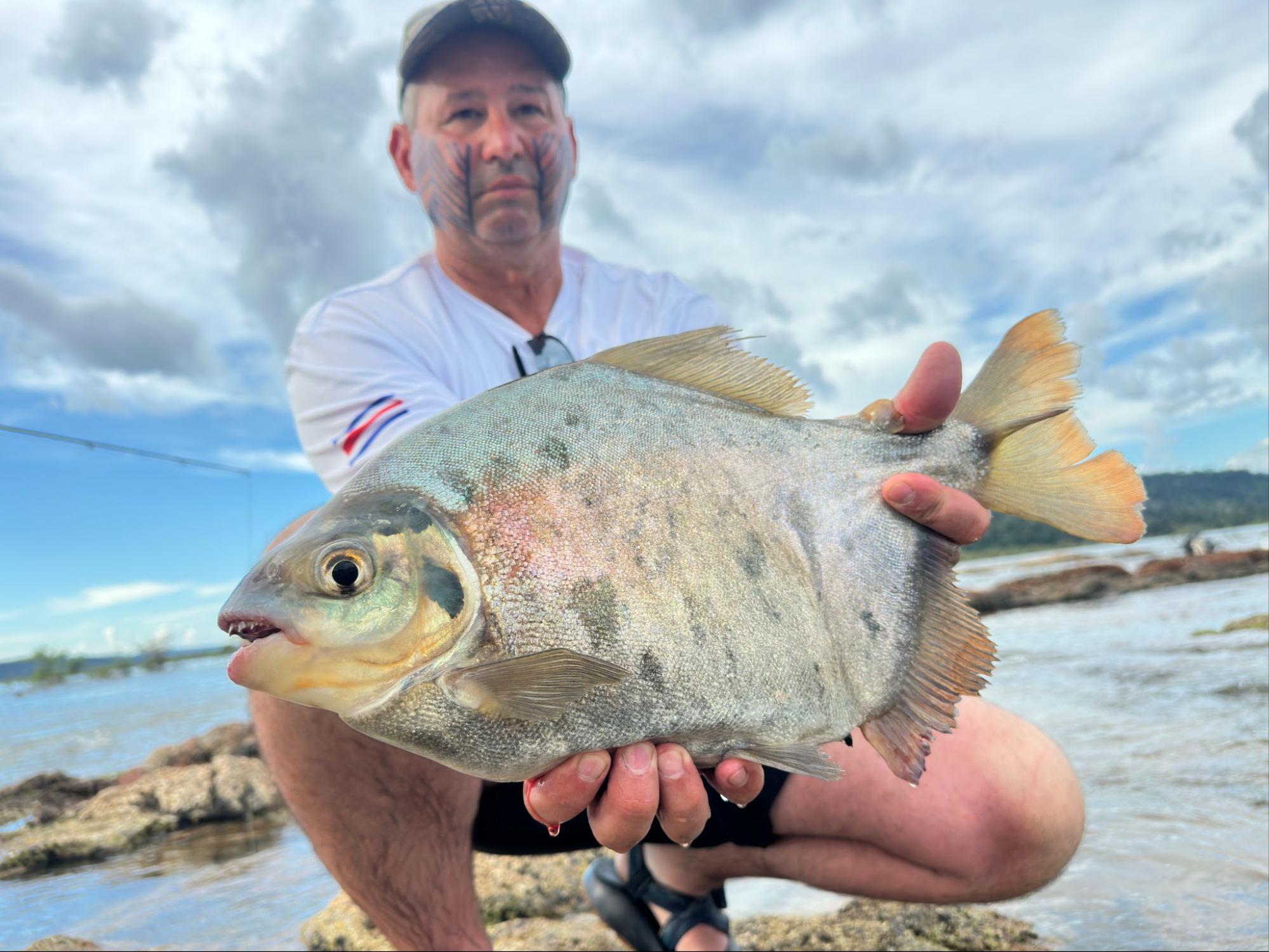
Pacu are closely related to tambaqui, with differences in head shape, dentition, and size at maturity.
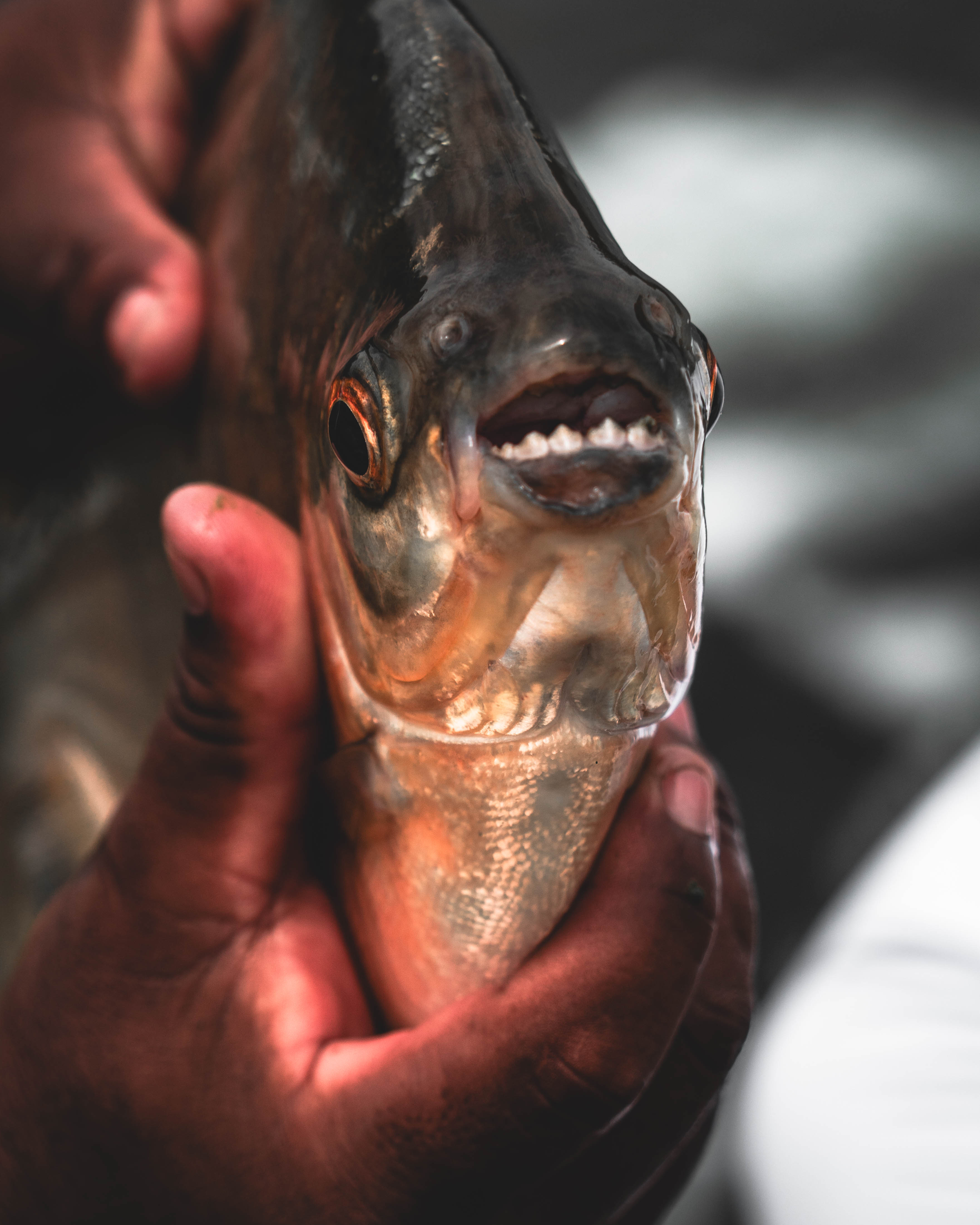
Their teeth are surprisingly human-like, adapted for cracking hard fruits.
During flood season, they migrate into submerged forest to feed on falling nuts and seeds.
Their ability to digest tough plant matter helps spread tree species throughout the Amazon basin.
Highly prized for their white meat, pacu are also widely farmed in Brazil.
Where to Catch
Anglers can encounter pacu on several multi-species and exotic fishing adventures with Acute Angling:
Rio Aripuanã Multi-Species Lodge Trip – One of the best chances to target tambaqui and pacu in quiet lagoons.
Xingu River Adventure – Explore deep tributaries and side channels for exotic species.
Paraná River Golden Dorado Trip – Southern variant (small-scaled pacu) often caught while targeting golden dorado.
Quick Facts
| Attribute | Description |
|---|---|
| Scientific Name | Colossoma macropomum |
| Common Names | Pacu, Tambaqui (often used interchangeably), Curupeté, Black Pacu |
| Size Range | 8–25 lbs common; can reach 60+ lbs |
| Region | Amazon, Orinoco, and Tocantins-Araguaia basins |
| Habitat | Floodplain forests, lagoons, slow tributaries |
| Behavior | Frugivore/omnivore – migratory with flood seasons |
| Coloration | Gray to dark brown with reddish or orange fins |
| Aggression | Low – less combative than predators, but still powerful |
| Feeding Habits | Primarily frugivorous – fruits, seeds, aquatic plants |
| Gamefish Status | Strong, stubborn fighter – rewarding on light tackle |
Physical Appearance
Pacu have a deep-bodied, disc-like shape with a short, rounded snout. The mouth is relatively small and slightly downturned, housing a set of molar-like teeth designed for crushing. Adults are dark gray to black with orange or reddish fins. Their thick, muscular bodies make them one of the Amazon’s toughest fish pound-for-pound.
How to Identify a Pacu
Wide, oval body shape, deeper than a piranha or peacock bass.
Downturned mouth with blunt teeth resembling human molars.
No distinct canine teeth (unlike piranhas).
Dark coloration with reddish fins (especially on juveniles).
No spiny dorsal fin – soft-rayed throughout.
How to Catch Pacu
Targeting pacu requires a mix of finesse and patience. They are strong, deliberate feeders and respond best to natural presentations.
Recommended Techniques
Fish near overhanging trees, submerged forest, or lagoons during high water.
Present fruit baits or cut chunks of native nuts (e.g., rubber fruit).
Keep bait stationary and let the fish find it rather than retrieve.
Suggested Gear
Rod: Medium-heavy spinning or baitcasting rod
Line: 30–50 lb braid
Leader: 60–80 lb mono or fluoro
Hooks: 2/0–5/0 circle hooks for bait fishing
Fly Rod: 8–10 wt with fruit-mimicking patterns (e.g., poppers, foam fruit flies)
Related Reading
Join The Adventure
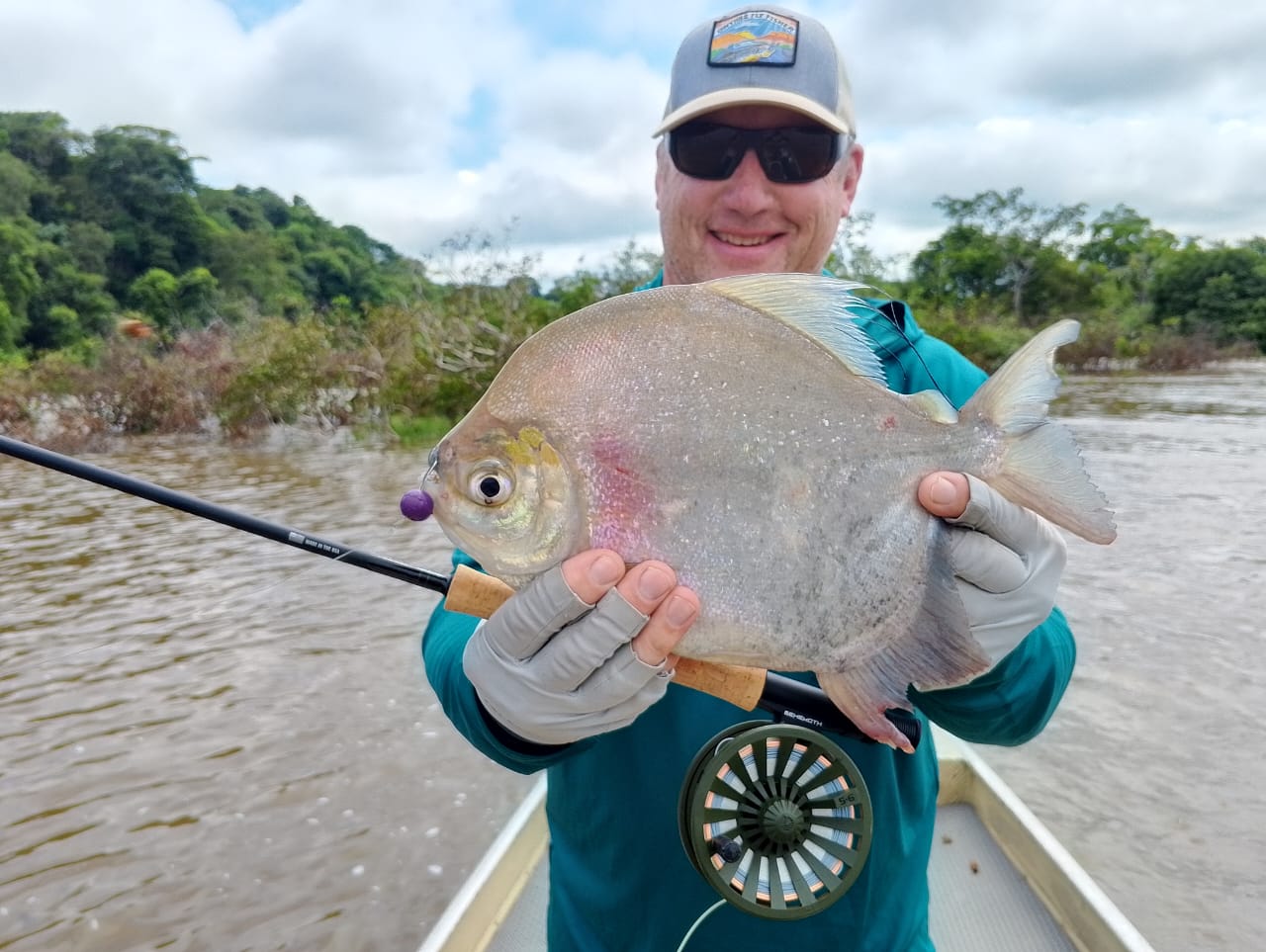
Want to hook into a true Amazon heavyweight? Join an Acute Angling multi-species trip and tangle with the powerful, fruit-eating pacu in its natural flooded forest environment.
Contact us today:
📞 (866) 832-2987
References
Zeinad, A. K. & Prado, R. A. (2012). Peixes fluviais do Brasil: espécies esportivas
Santos, G.M. et al. (2006). Peixes do Rio Madeira.
Nature: Amazon biodiversity dataset
Goulding, M. (1980). The Fishes and the Forest
FishBase (2024). Colossoma macropomum profile. www.fishbase.org


