Jacundá
The Amazon’s Ambush Assassin
Jacundá
The Amazon’s Ambush Assassin
Guide
The Jacundá is one of the Amazon’s most voracious ambush predators, often likened to a freshwater barracuda for its long, torpedo-shaped body, toothy jaws, and explosive strikes. Belonging to the same family as peacock bass (Cichlidae), this cunning hunter thrives along submerged structure and dense shoreline cover, where it lies in wait to ambush unsuspecting prey.
Although Jacundás don’t reach the massive sizes of catfish or arapaima, they are highly aggressive, widely distributed, and provide thrilling action on light tackle. With dozens of species across South America—many yet to be formally described—the Jacundá represents an exciting, diverse target for multi-species anglers.
Interesting Facts & Notes
The genus Crenicichla includes over 100 species across South America.
They are closely related to peacock bass but tend to be slimmer and more elongate.
Some species are vividly colored, with bright reds, greens, and lateral banding.
Known to be territorial and aggressive, especially during the breeding season.
Juvenile Jacundás are often misidentified due to their similarity with young peacock bass or wolf fish.
Where to Catch Jacundá
Rio Aripuanã - Where anglers target payara, peacock bass, redtail catfish, arowana, bicuda, and black piranha through the clear waters of Brazil's Southern Amazon Basin. Few Amazon fishing trips can match the sheer variety of gamefish available here across multiple seasons.
Xingu River - Delivers world-class fishing for payara, peacock bass, wolfish, bicuda, giant catfish, and more in strikingly clear water. Crystal-clear rapids, pools, and side channels create ideal conditions for trophy hunting and sight fishing deep in the Amazon.
Curicuriari Lodge - peacock bass fishery, built for anglers chasing the largest, most hard-fighting peacock bass the Amazon has to offer. Fish over 15 pounds are a real possibility, with 20-pound giants within reach for the prepared angler.
Floating Bungalows - Puts anglers on the Rio Negro in pursuit of peacock bass across pristine blackwater lagoons. With catch rates of 15–25+ fish per day, it's one of the most productive peacock bass fishing trips in the Amazon.
Quick Facts
| Attribute | Description |
|---|---|
| Scientific Name | Crenicichla spp. |
| Common Names | Jacundá, Pike Cichlid, Joaninha (ladybug fish), Mariana |
| Size Range | Typically 10–16 in. (25–40 cm); some species reach over 20 in. |
| Region | Amazon Basin, Tocantins-Araguaia, Orinoco |
| Habitat | Margins of rivers, oxbows, backwaters, flooded forest |
| Behavior | Solitary ambush predator |
| Coloration | Often olive to brown, with dark spots or bars; may display reds and greens |
| Aggression | High—territorial and strike-prone |
| Feeding Habits | Carnivorous—feeds on small fish, insects, and crustaceans |
| Gamefish Status | Popular light-tackle target in multi-species trips |
Physical Appearance
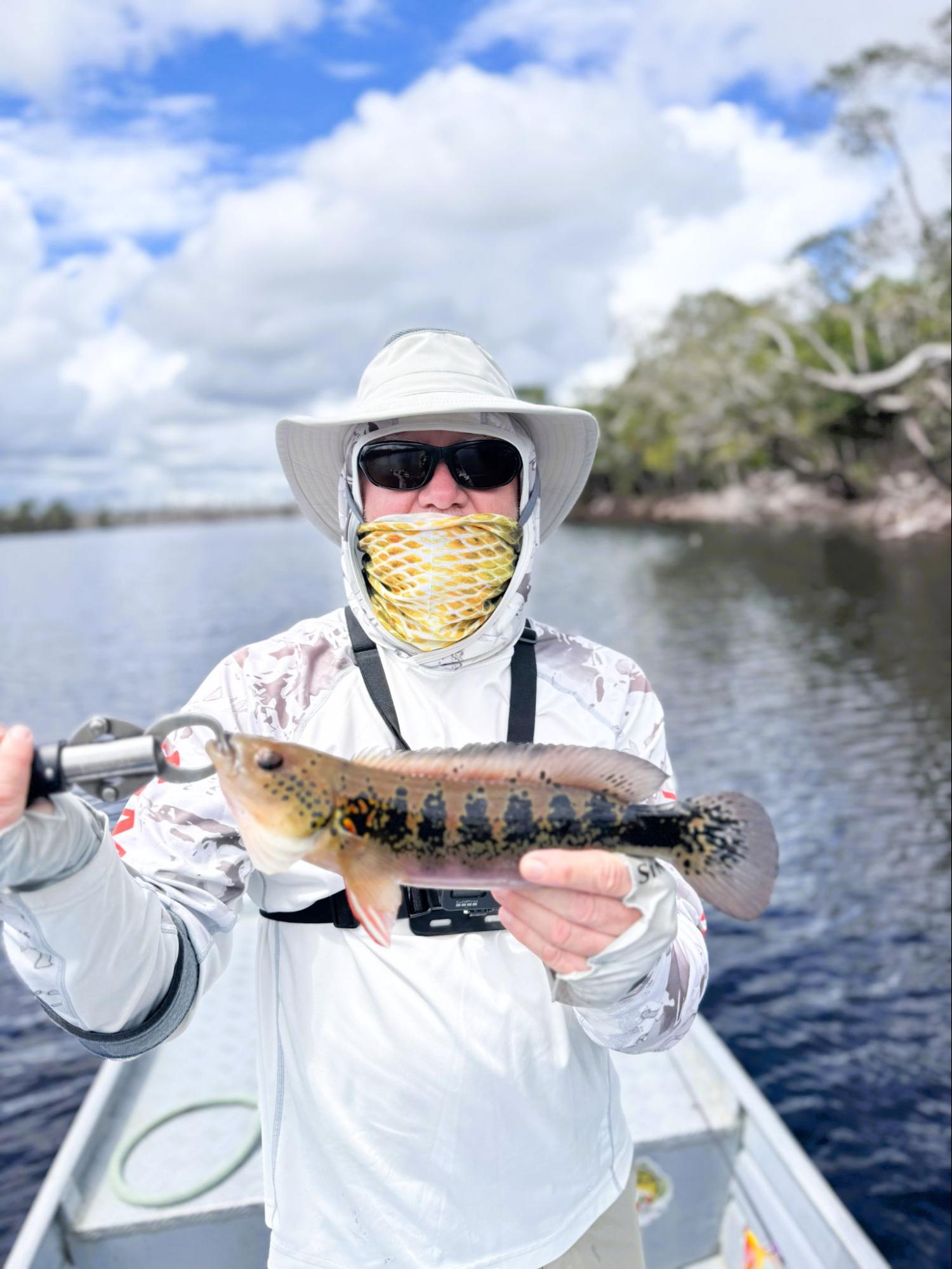
Jacundás have long, streamlined bodies with a tapered snout and large mouth lined with sharp teeth. Their coloration varies greatly by species, ranging from dull browns and grays to brilliant oranges, greens, and reds. Most have a prominent lateral stripe and spots or blotches on the tail and dorsal area. Some species exhibit a distinctive black spot on the gill plate.
How to Identify a Jacundá
Jacundá (Pike Cichlid): Slender and elongated with a pointed snout and large mouth; lateral stripe often present.
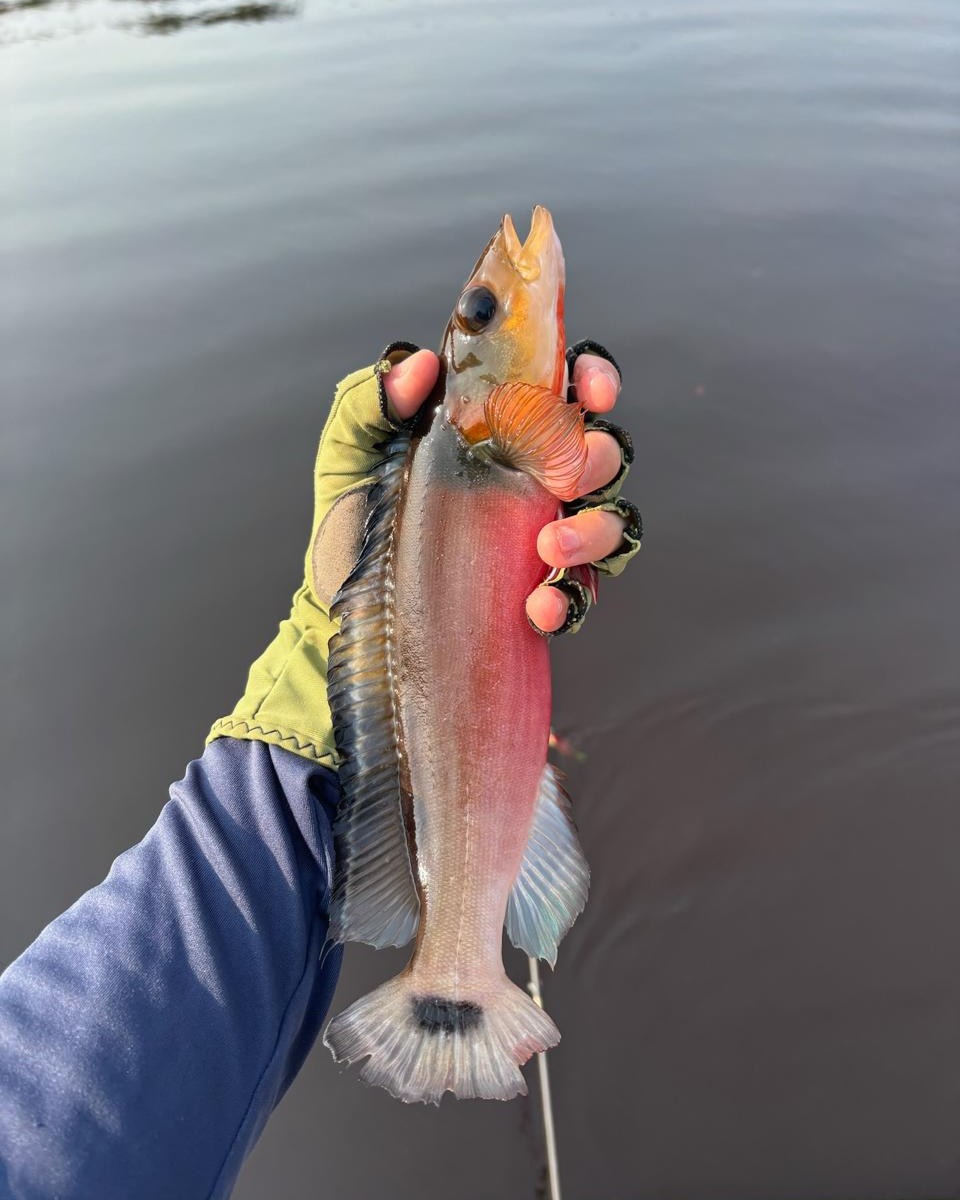
Mariana / Joaninha (Ladybug Jacundá): Smaller and more vibrantly colored with red-orange flanks and spotted fins.
Crenicichla marmorata: Often confused with juvenile wolf fish, but distinguished by its narrower body and more pronounced lateral line.
Fishing Tactics: How to Catch a Jacundá
Recommended Techniques
Jacundá strike best when ambushed with precision. Cast lures close to cover—submerged trees, overhanging brush, rocky ledges—and retrieve with sharp twitches or steady pulls. These fish love to hide and explode on prey darting by their ambush zone. They are also caught incidentally while targeting peacock bass with jigs or diving plugs.
Cast parallel to the shoreline
Focus on slack water, structure, and shaded zones
Slow or erratic retrieves often trigger strikes
Suggested Gear
Rod & Reel: Medium-light spinning or baitcasting gear
Line: 20–30 lb braided line with 30–40 lb fluorocarbon or mono leader
Lures: Small jigs, jerkbaits, shallow divers, and soft plastics
Fly fishing: Not typically targeted with flies, but will strike streamers in tight quarters
Related Reading
Join The Adventure
Ready to target the Jacundá in the heart of the Amazon? Join one of our multi-species adventures and put your skills to the test.
Contact us today:
📞 (866) 832-2987
References
Zeinad, A. K. & Prado, R. A. (2012). Peixes fluviais do Brasil: espécies esportivas.
Kullander, S. O. (2003). Cichlid Fish Behavior and Taxonomy.
Nelson, J. S. (2006). Fishes of the World.


